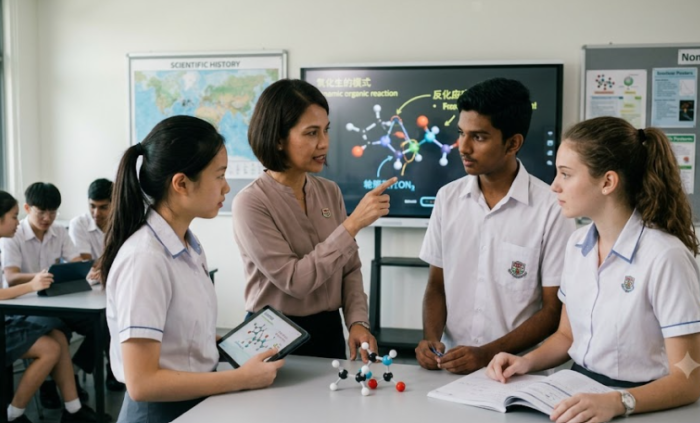
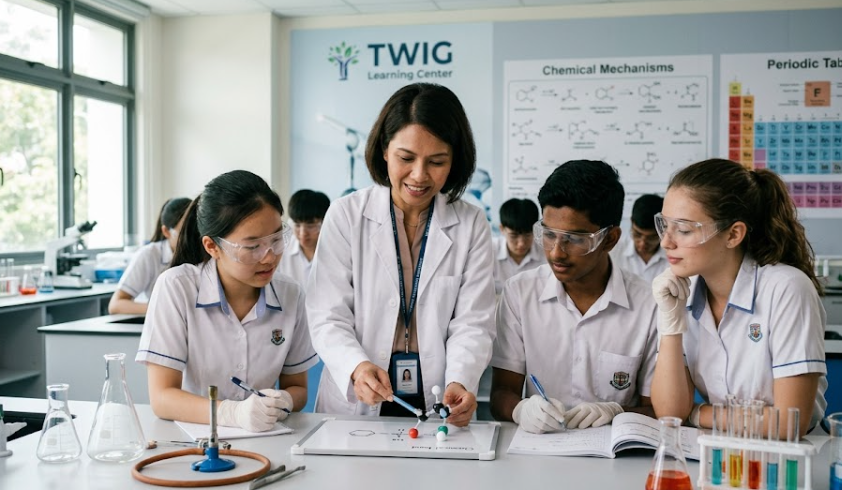
For most students, chemistry is nothing more than just sets of equations and calculations, or even the place in a chemistry lab with dangerous-looking chemicals and complicated formulas. They are part of the course, but there is more to chemistry- it develops thinking, reasoning, and logic.
The skills required in chemistry are not only an advantage in achieving good grades. The skills gained provide a firm educational foundation that can be referred back to, thereby greatly helping the student along the way. If at the start, one can envisage a future as a doctor, engineer, pharmacist, researcher, or scientist, the route usually starts with chemistry.
It is not enough to do direct workload, learning by heart from these books, to cultivate those skills. It needs sustained understanding and practice.
Chemistry Is a Subject That Builds on Itself
In other subjects, you can learn the topics separately. However, in a subject like chemistry, topics follow sequentially, with later ones depending on earlier ones.
E.g., Knowledge of atomic structure is required before studying chemical bonding, which in turn is needed for molecular shapes, mechanisms, and organic chemistry. If there is one small gap in knowledge, it can cause a rush of many topics!
Those who lay a more solid foundation early on are more likely to take the challenging route than be bogged down by a hard concept.
This is no surprise, as so many students seek out A Level Chemistry Tuition Singapore, where tuition is based on the rigor of the basics and attempts at the hardest application questions.
Learning to Think Instead of Memorizing
The most common misconception about chemistry is the belief that you can do well by memorizing formulas and definitions.
In reality, there is a trend away from memorizing and toward reasoning. Students will need to explain reactions, interpret results, and discuss experiments as they solve new problems using their scientific knowledge.
Students who master concepts will understand how to apply their knowledge from one kind of problem to another without resorting to memorizing solutions.
This kind of learning would make chemistry easier, more logical, and enjoyable.
Confidence Grows Through Small Wins
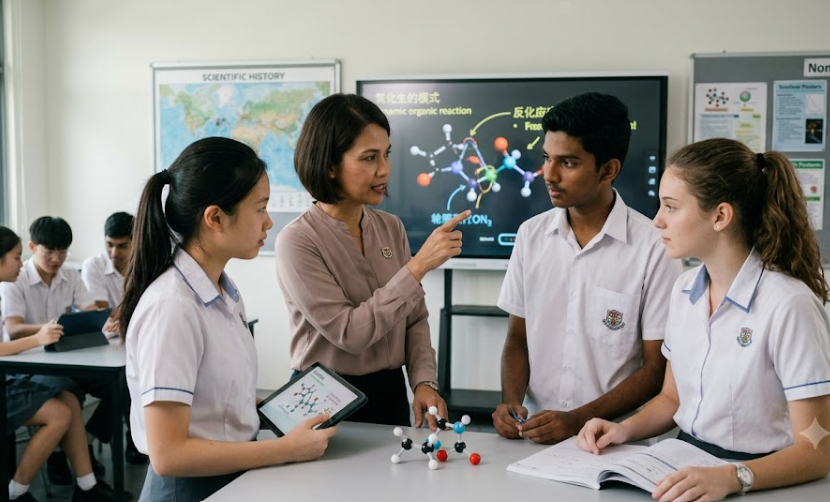
Most of the time, when you start work, you will not actually be confident about it.
Cue when students begin working on problems they have struggled with in the past, understand ideas that left them lost, and slowly start to gain points.
Any calculation we get right, any reaction we manage to explain, any practice paper we do, increases our confidence.
There isn’t any anxiety about the chemistry classes and exams, only a keen interest and clear focus.
Positive thinking works in many subjects, not just Math.
Strong Chemistry Skills Create Better Study Habits
Chemistry students who earn good grades develop learning strategies that they continue to employ throughout other classes.
These habits include:
- Organizing study schedules effectively
- Break down tough topics into smaller, more digestible pieces.
- In-depth/ continuous revision of topics rather than condensing everything just prior to an exam.
- Practice application-style questions regularly.
- What we learn from our mistakes. Cannot repeat one’s mistakes generally.
All the skills mentioned above enable us to be more productive in math, biology, and physics courses, as well as in university courses that use them.
If we succeed in school, it isn’t because we’re so smart; it is because of the simple study methods we have developed over the years.
Preparing for More Than School Examinations
Applying chemistry knowledge effectively goes far beyond those tests and quizzes.
Most highly competitive university courses involve applying scientific knowledge and analytical thinking. Some examples of courses that require an element of chemistry include: chemical engineering, biology, medicine, dentistry, environmental science, pharmacy, biochemistry, and biotechnology.
Students who acquire these skills while studying in a pre-university center usually have less difficulty and feel less daunted by higher education.
Spend some time today mastering the intricacies of chemistry and smile through all the upcoming tests.
Personalized Support Makes Learning More Effective
Everyone has issues.
Some struggle with calculations and some with organic chemistry, but others excel at the theory part, yet just can’t get their heads around the exam question!
Personalized learning addresses these variations by assessing each child’s distinct weaknesses, rather than a one-size-fits-all approach.
This is ultimately where A-Level Chemistry Tuition in Singapore can be most beneficial. Well-structured lessons, targeted drills, and responsive feedback make all the difference.
More focused, effective, and rewarding learning.
Turning Knowledge Into Real Problem-Solving Skills
Your current chemistry tests are meant to test understanding, not memorization.
Learning occurs when the learner is presented with problems for which he has not been trained and, as a consequence, must integrate knowledge from multiple sources to produce a response.
Ongoing exercises: Then it becomes practice, practice all kinds of questions, apply them to situations you encounter, and make use of problem-solving.
As they develop reasoning skills, students can analyze information critically, make connections among ideas, and approach difficult problems systematically.
All of these skills are considered transferable skills for higher education and employment.
A Learning Environment That Encourages Growth
A student’s progress is influenced not only by the study materials but also by the surroundings in which he/she grew up.
A positive learning environment encourages students to feel free to ask questions, bravely discuss complex topics together, and learn comfortably through practice.
Users at the Twig Learning Center are told the reasons to use learners to learn everything, and not to learn answers by heart. This supports the development of active learners and rapid post-class improvement.
Learning becomes an adventure of continually questioning, problematizing, searching, and seeking meaning, rather than covering the curriculum quickly.
Building Opportunities for the Future
Chemistry is an altogether different experiment.
Develops discipline, enhances analytical skills, improves decision-making, and better equips students for the ever-escalating challenges of academic life.
Anyone who has made the effort to learn chemistry will discover how interesting it is and how it is an important key that will open many educational doors and improve their employment prospects.
If students put in consistent effort, study effectively, and receive sufficient academic support through A-level Chemistry Tuition in Singapore, they will develop strong Chemistry skills, thereby achieving not only excellent exam results but also a long-term, successful academic career and a brighter future.